Complete value chain for responsible seabed minerals demonstrated

Environmental focus throughout all activities and results beyond expectations is the short summary of the EMINENT project.
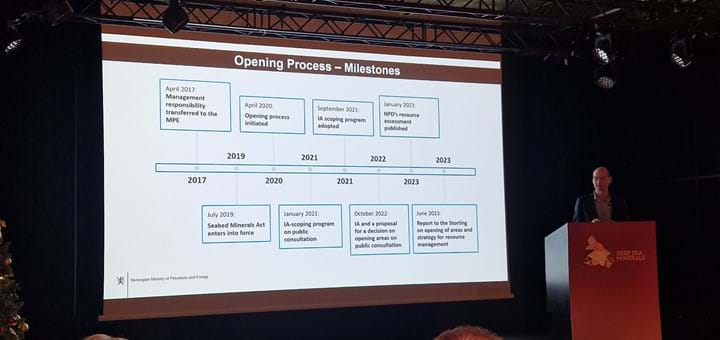
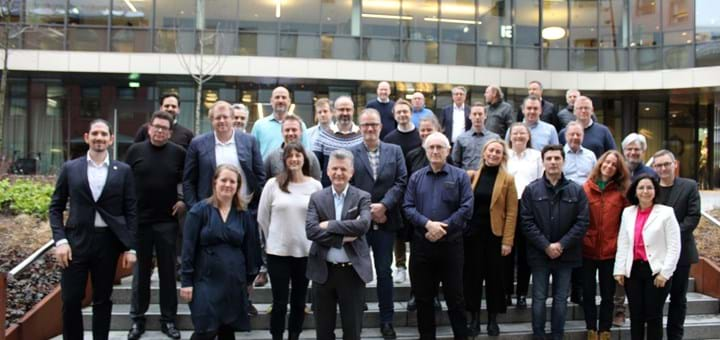
The EMINENT project hosted an open summit in Bergen this week, where the results from the three-year long project were presented.
Many achievements
The project has accelerated innovation and knowledge along the entire value chain for seabed minerals. New mineral discoveries showing high ore grades have strengthened geological understanding.
AI analysis of images and video has been used in combination with eDNA to fast track and increase our understanding of the deep-sea ecosystem. Current data do not support the presence of endemic species. Eco-system as similar at adjacent seamounts.
Miriam Brand, a researcher at NORCE, notes that while more data and samples will be needed in the years to come, the technology and tools to advance this are already available.
The project developed beneficiation flowsheets, demonstrated that premium-grade copper concentrate can be produced from seafloor massive sulphides.
Mahesh Kulkarni from ReSiTec and the Future Materials Catapult Centre sees no reason why tailings should be a larger challenge with seabed minerals than with land-based mining. He points out that the processes demonstrated need scaling, but that the processes and steps are well established.
Future possible operators see the potential to use side products for CO₂-free concrete, CO₂-absorbing materials, and acid needed for recycling.
Profitable without subsidies
The industry is confident that seabed minerals will be profitable. Higher ore grades discovered are a main reason behind this, but also flexible offshore infrastructure and transport to sea, which is by far the most cost-efficient.
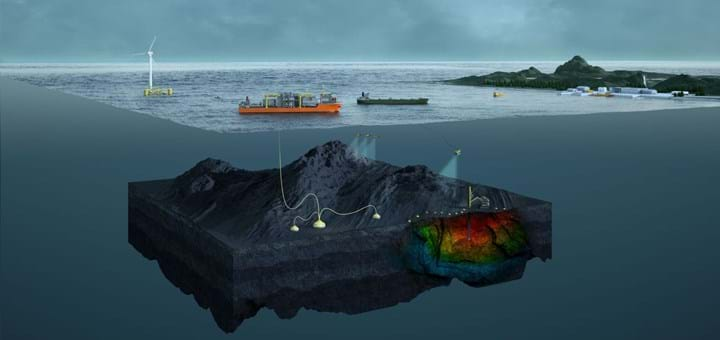
Parallel operations and leveraging offshore technology have been used to minimise impact and increase cost efficiency.
Results beyond expectations
EMINENT is partly funded by the Green Platform program, which supports the best projects driving the green transition—taking care of the climate and environment while creating economic value.
The Green Platform scheme is regarded as a mark of good quality and EMINENT is a strong consortium with high environmental focus throughout all activities.
From the Research Council of Norway’s perspective, the project appears to have succeeded and even surpassed initial expectations, according to Ingrid Anne Munz.
What’s next?
As part of the governmental budget agreement, a four-year pause in the licensing round has recently been agreed, despite an 80% majority in Parliament in favour of a licensing round.
Research and governmental mapping seem to be continuing, but funding for the Norwegian Offshore Directorate—responsible for the work—has been cut.
The industry has clearly contributed to advancing deep-sea research both in Norway and globally. The Norwegian industry was ready to invest billions in deep-sea exploration in the expected licensing round.
How much effort and money can and will the industry commit in the current political landscape?
Contact Information

About
The EMINENT Green Platform project aims to establish the basis for an integrated value chain for deep-sea minerals with a much smaller environmental footprint than current mining operations.
The project has developed and demonstrated new technology and methodology within environmental monitoring, resource exploration, production and mineral processing.
The three-year project (2023-2025) has a total budget of about 150 million NOK and includes 5 research partners and 10 industry partners.
Green platform is a program supported by The Research Council of Norway, SIVA and Innovation Norway.